

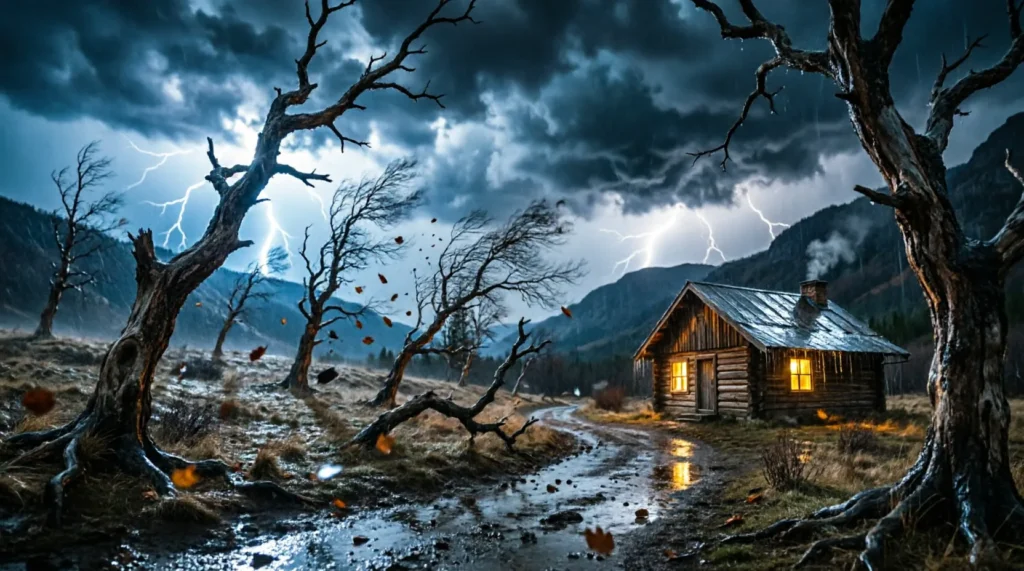
When searching for a simile for the wind howled like, writers often struggle to move beyond tired clichés. A strong simile grounds the abstract, chaotic noise of a storm in concrete, sensory reality, allowing your reader to hear the scene rather than just being told about it. As noted in the foundational definition of a simile, this figure of speech explicitly compares two different things using “like” or “as,” making it the perfect tool for anchoring wild weather to familiar, tangible experiences. The examples below are categorized by mood and setting, giving you ready-to-use options for everything from gothic suspense to lyrical nature writing.
Primal and Animalistic Similes
When the wind strips away civilization, it sounds wild, untamed, and deeply instinctual. These comparisons tap into the raw, predatory nature of a severe storm.
- “like a pack of starving wolves” — “The wind howled like a pack of starving wolves circling the isolated farmhouse.” (menacing, urgent)
- “like a cornered bear” — “As the storm broke, the wind howled like a cornered bear trapped in the narrow valley.” (aggressive, defensive)
- “like a grieving hound” — “Through the cracked floorboards, the wind howled like a grieving hound left out in the freezing cold.” (mournful, lonely)
- “like a territorial tiger” — “The gale force wind howled like a territorial tiger defending its mountain pass.” (fierce, commanding)
- “like a flock of screeching owls” — “Up in the eaves, the wind howled like a flock of screeching owls disturbed from their roost.” (chaotic, sharp)
- “like a wounded stag” — “The autumn wind howled like a wounded stag stumbling through the barren woods.” (tragic, raw) Craft note: This works because the open vowel sounds in “wounded stag” force the reader to slow down, mimicking the drawn-out, breathy quality of a real animal howl.
- “like a swarm of angry hornets” — “The wind howled like a swarm of angry hornets trapped inside the chimney.” (irritating, relentless)
- “like a mother cow calling her calf” — “In the distance, the wind howled like a mother cow calling her calf across the foggy pasture.” (yearning, pastoral)
Human and Emotional Similes
Personifying the wind gives it human motives, turning a weather event into an emotional antagonist or a sympathetic companion.
- “like a heartbroken widow” — “All night long, the wind howled like a heartbroken widow pacing the empty halls.” (sorrowful, haunting)
- “like an angry mob” — “The wind howled like an angry mob demanding entry at the reinforced steel doors.” (threatening, collective)
- “like a child lost in the dark” — “Beneath the bed, the wind howled like a child lost in the dark, seeking comfort.” (vulnerable, unsettling)
- “like a frustrated poet” — “The wind howled like a frustrated poet unable to find the right words for his grief.” (melancholic, artistic)
- “like a scorned lover” — “The wind howled like a scorned lover throwing stones against the bedroom window.” (bitter, passionate)
- “like a weary traveler” — “The wind howled like a weary traveler begging for shelter from the biting frost.” (exhausted, desperate) Craft note: I often tell my students that personifying the wind with human exhaustion makes a storm feel less like a natural disaster and more like a shared, empathetic struggle.
- “like a panicked crowd” — “When the tornado sirens wailed, the wind howled like a panicked crowd rushing for the exits.” (chaotic, fearful)
- “like a madman laughing at the sky” — “The wind howled like a madman laughing at the sky, utterly unhinged by the tempest.” (unhinged, manic)
Musical and Instrumental Similes
Focusing on the acoustic properties of the wind helps readers “hear” the exact pitch, rhythm, and texture of the storm.
- “like a broken pipe organ” — “The wind howled like a broken pipe organ missing half its pipes in an abandoned cathedral.” (hollow, resonant)
- “like an out-of-tune cello” — “The wind howled like an out-of-tune cello dragged brutally across its strings.” (discordant, grating)
- “like a brass section in a panic” — “The wind howled like a brass section in a panic, blaring without rhythm or conductor.” (loud, chaotic)
- “like a flute played by a ghost” — “Through the keyhole, the wind howled like a flute played by a ghost, thin and impossibly high.” (eerie, delicate)
- “like a thousand kazoos” — “The wind howled like a thousand kazoos, turning the terrifying storm into something almost absurd.” (comedic, mocking)
- “like a bowed saw” — “The wind howled like a bowed saw, producing a wavering, metallic shriek that set my teeth on edge.” (uncomfortable, sharp) Craft note: The comparison to a bowed saw is highly effective because it invokes a specific, visceral physical reaction (teeth on edge) that purely visual descriptions cannot achieve.
- “like a distorted electric guitar” — “The wind howled like a distorted electric guitar left on maximum volume in an empty garage.” (modern, abrasive)
- “like a choir of off-key singers” — “The wind howled like a choir of off-key singers, creating a dissonant harmony that disturbed the sleep of the whole town.” (unsettling, communal)
Mechanical and Industrial Similes
In urban or dystopian settings, the wind often sounds manufactured, oppressive, and relentlessly powerful.
- “like a failing jet engine” — “The wind howled like a failing jet engine, vibrating the very foundations of the airport terminal.” (deafening, mechanical)
- “like a rusted factory whistle” — “At midnight, the wind howled like a rusted factory whistle signaling a shift that never ends.” (dystopian, oppressive)
- “like a derailed freight train” — “The wind howled like a derailed freight train screeching its way down the mountain pass.” (destructive, heavy)
- “like a vacuum cleaner choking on debris” — “The wind howled like a vacuum cleaner choking on debris, sputtering and gasping for air.” (sputtering, weak)
- “like a pressure valve about to burst” — “The wind howled like a pressure valve about to burst, promising imminent, explosive release.” (tense, impending) Craft note: This simile builds excellent narrative tension. By comparing the wind to a pressure valve, you signal to the reader that a climax or turning point is physically imminent.
- “like a grinding gear in a clocktower” — “The wind howled like a grinding gear in a clocktower, marking time with painful, metallic friction.” (relentless, precise)
- “like a chainsaw hitting a knot” — “The wind howled like a chainsaw hitting a knot, suddenly changing pitch from a roar to a violent shriek.” (jarring, abrupt)
- “like a steam locomotive” — “The wind howled like a steam locomotive barreling through the night, bringing with it the smell of ozone and rain.” (powerful, nostalgic)
Supernatural and Eerie Similes
For horror, suspense, or magical realism, the wind becomes a conduit for the uncanny, the cursed, or the otherworldly.
- “like a banshee mourning the dead” — “The wind howled like a banshee mourning the dead, promising that no one would sleep peacefully tonight.” (mythological, terrifying)
- “like a demon trapped in a bottle” — “The wind howled like a demon trapped in a bottle, desperate to shatter the glass and escape.” (claustrophobic, malevolent)
- “like a phantom ship’s siren” — “Out on the coast, the wind howled like a phantom ship’s siren, luring sailors toward the jagged rocks.” (seductive, deadly)
- “like a curse spoken aloud” — “The wind howled like a curse spoken aloud, carrying the weight of ancient, unresolved anger.” (ominous, heavy)
- “like a vampire hissing at the dawn” — “As the sun rose, the wind howled like a vampire hissing at the dawn, retreating into the shadows.” (defeated, sinister)
- “like a spirit wailing at the gates” — “The wind howled like a spirit wailing at the gates, demanding to be let into the world of the living.” (pleading, supernatural) Craft note: When writing horror or suspense, anchoring the wind to a specific mythological figure instantly imports all the cultural baggage and fear associated with that creature, doing half your descriptive work for you.
- “like a witch’s familiar” — “The wind howled like a witch’s familiar, circling the cottage and waiting for its master’s command.” (obedient, creepy)
- “like the earth itself crying out” — “The wind howled like the earth itself crying out, a primordial sound that made the hair on my arms stand up.” (epic, awe-inspiring)
How to write your own wind howling simile
Crafting a memorable comparison requires moving past your first instinct. Follow these three steps to build a simile that feels fresh and precise.
- Isolate the acoustic quality: Determine the exact sound of the wind in your scene. Is it high-pitched and thin, low and rumbling, or sputtering and irregular?
- Brainstorm a concrete noun: Pick a specific object, animal, or instrument from a defined domain that produces a matching sound. Avoid broad categories like “animal” or “machine.”
- Connect and reinforce: Join them using “like” or “as,” and ensure the surrounding sentence reinforces the mood you want to evoke.
Worked example: Instead of reaching for the generic “the wind howled like a wolf,” identify that the wind is whistling through a narrow, brick alleyway. Match that high, tight, building sound to a specific domestic object: “The wind howled like a tea kettle left too long on the stove, building to a frantic, inescapable shriek.”
Frequently Asked Questions
What is the difference between a simile and a metaphor when describing the wind? A simile explicitly uses “like” or “as” to compare the wind to something else, while a metaphor states the wind is that thing. This explicit comparison makes similes particularly useful for grounding abstract weather phenomena in concrete, relatable imagery without fully committing to the absolute personification a metaphor requires.
Why is “howled” such a strong verb for wind descriptions? The word “howled” already carries heavy acoustic and emotional weight, implying a prolonged, loud, and often mournful sound. This acoustic quality is so distinct that it crosses over into human performance; for instance, howled vocals in music rely on guttural, extended tones to convey raw, untamed emotion, mirroring the exact personification we apply to a raging storm.
Are there any wind similes I should avoid in my writing? Yes. Clichés like “like a freight train” or “like a wolf” have been overused to the point of invisibility. Readers’ eyes will glide right over them. Instead of reaching for the first comparison that comes to mind, push for specificity. “Like a derailed freight train screeching down a mountain pass” is vastly superior to the tired, standalone comparison.
Can a simile for the wind be funny or lighthearted? Absolutely. While “howled” often leans dark or dramatic, juxtaposing it with an absurd or mundane comparison creates excellent comedic contrast. For example, “the wind howled like a toddler denied a cookie” instantly deflates the tension of a storm, making it perfect for humorous or lighthearted contemporary fiction.

Brandon Robinson is a literary enthusiast and seasoned editor with a deep-rooted passion for figurative language and its transformative power in storytelling. He completed his Ph.D. in Linguistics from the University of Chicago, specializing in the cognitive impact of metaphors and similes in narrative construction. With over 18 years in the publishing industry, Brandon has helped shape numerous literary works by providing his expertise in metaphorical nuance and creative expression. His journey into the world of similes began when a high school poetry class opened his eyes to the elegance of figurative comparisons. At SimileCraft, Brandon writes thought-provoking essays that explore the cognitive science behind similes, while also curating content that inspires writers to use these tools more effectively. His pieces are a blend of scholarly insight and practical advice, tailored for an audience eager to deepen their literary skills.