

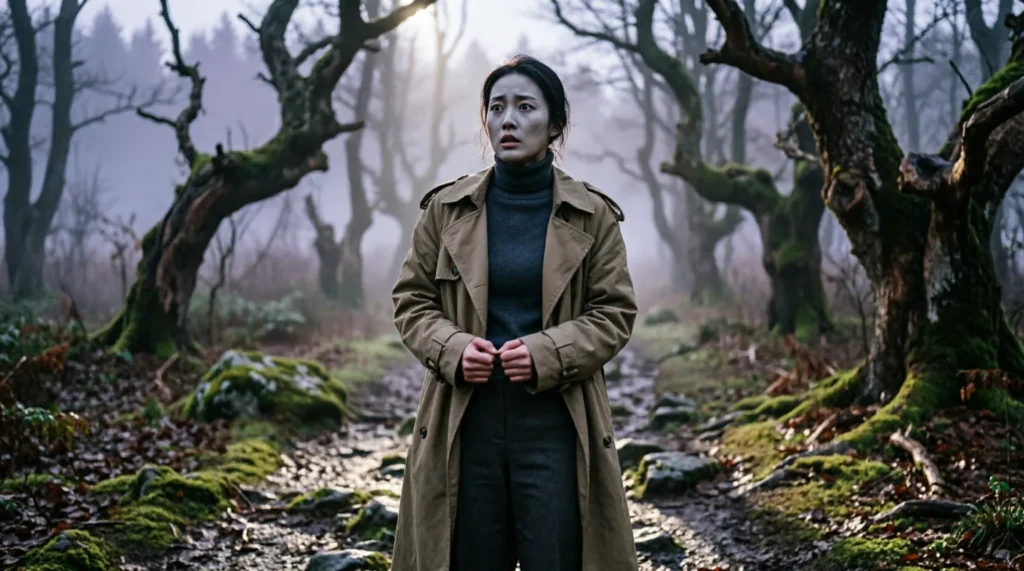
Similes for fear transform an abstract, internal sensation into a tangible image that readers can feel in their own bodies. The examples below are organized by intensity and context, each paired with a working sentence and a craft note so you can deploy them immediately in fiction, memoir, or narrative nonfiction without sounding cliché.
Visceral and Physical Similes for Sudden Terror
When fear arrives as a shock to the nervous system, the best similes bypass intellect and land directly in the body. These comparisons work because they mirror the physiological reality of the fight-or-flight response, which Fear defines as a vital survival mechanism involving intense physical arousal and immediate threat assessment. Use these when your character has just encountered danger, not when they are merely worried about tomorrow’s meeting.
- “as cold as ice water in the veins” — “The phone rang at 3:00 AM, and the dread was as cold as ice water in the veins.” (clinical, numbing). This works because it replaces the vague “chill” with a specific substance and location, forcing the reader to imagine the sensation internally rather than observing it externally.
- “like a fist closing around the throat” — “She opened the letter and felt panic like a fist closing around the throat.” (violent, suffocating). Avoid “lump in the throat,” which has been drained of meaning through overuse; the active verb “closing” restores agency to the fear itself.
- “as sharp as broken glass under bare feet” — “His realization hit as sharp as broken glass under bare feet.” (acute, wincing). The specificity of “bare feet” prevents this from becoming a generic pain metaphor and grounds the emotion in a universally understood vulnerability.
- “like swallowing a stone whole” — “Guilt sat in her stomach like swallowing a stone whole.” (heavy, immovable). This simile captures fear’s weight better than “butterflies,” which now reads as nervous excitement rather than genuine dread.
- “as taut as a wire about to snap” — “He stood in the doorway, his silence as taut as a wire about to snap.” (tense, anticipatory). The phrase “about to snap” adds temporal urgency that static descriptions of tension lack, making the reader wait for the break.
- “like a trapped bird battering against the ribcage” — “Her heart fluttered like a trapped bird battering against the ribcage.” (frantic, confined). While “heart pounding” is exhausted, specifying the ribcage as a cage restores the claustrophobia that makes cardiac fear palpable on the page.
- “as dry as ash in the mouth” — “He tried to speak but his tongue was as dry as ash in the mouth.” (desiccated, speechless). This outperforms “cotton mouth” because ash carries connotations of destruction and aftermath, layering meaning beneath the physical sensation.
- “like stepping off a curb into nothing” — “The diagnosis landed like stepping off a curb into nothing.” (disorienting, groundless). This captures the vestibular shock of bad news more accurately than “the floor dropped out,” which has become a dead metaphor through repetition.
Psychological and Lingering Similes for Dread
Not all fear announces itself with adrenaline; some varieties seep in slowly and colonize the mind for hours, days, or years. These similes suit scenes of anxiety, anticipation, trauma response, or existential unease where the threat is uncertain or ongoing. They prioritize mental texture over physical jolt, and they demand a slower narrative pace to earn their keep.
- “like fog that refuses to lift” — “The worry hung over the house like fog that refuses to lift.” (persistent, obscuring). Unlike “cloud,” fog implies proximity and infiltration; it gets inside windows and dampens sound, mirroring how chronic anxiety distorts perception.
- “as quiet as a held breath before bad news” — “The waiting room was as quiet as a held breath before bad news.” (suspended, communal). This transfers individual physiology onto a shared space, making the environment itself complicit in the dread.
- “like a splinter buried too deep to extract” — “The memory nagged like a splinter buried too deep to extract.” (irritating, inaccessible). Splinters are small but maddening; this simile earns its place in stories about unresolved trauma where the pain is disproportionate to the visible wound.
- “as thin as ice over dark water” — “Her composure was as thin as ice over dark water.” (precarious, concealing). This works in literary fiction because it implies both fragility and hidden depth, suggesting that breaking the surface will reveal something worse than the crack itself.
- “like a radio tuned between stations” — “His thoughts buzzed like a radio tuned between stations.” (staticky, incoherent). This modernizes the “racing mind” trope by replacing speed with interference, capturing anxiety’s inability to resolve into clear signal.
- “as heavy as wet wool” — “Grief wore on him as heavy as wet wool.” (soaking, exhausting). Wet wool is a tactile surprise; readers expect grief to be heavy, but they don’t expect it to be damp and clinging, which makes the comparison land fresh.
- “like a shadow that moves when you turn” — “Paranoia followed her like a shadow that moves when you turn.” (evasive, sentient). Shadows are passive in most metaphors; granting this one independent motion restores the uncanny quality that distinguishes pathological fear from ordinary caution.
- “as hollow as a drum beaten in an empty room” — “His reassurances sounded as hollow as a drum beaten in an empty room.” (resonant, false). This targets performed calm rather than felt fear, useful when a character is masking terror and the narrator sees through it.
Childhood and Innocent Similes for Vulnerable Fear
Fear experienced by children—or adults in states of regression, dependency, or naivety—requires similes scaled to smaller bodies and less sophisticated vocabularies. These comparisons draw from domestic spaces, playground logic, and fairy-tale causality. They are especially valuable in coming-of-age narratives, parenting memoirs, or any scene where power imbalance defines the emotional landscape.
- “as wide-eyed as a fawn in headlights” — “She stared at the stranger, as wide-eyed as a fawn in headlights.” (innocent, paralyzed). While “deer in headlights” is common, substituting “fawn” adds youth and softness that shifts the tone from comic freeze-response to genuine vulnerability.
- “like hiding under blankets from monsters” — “He faced the audit like hiding under blankets from monsters.” (regressive, futile). This simile acknowledges that adult fears often wear childhood costumes; the blanket offers no real protection, and naming that futility is the point.
- “as small as a mouse in a cathedral” — “She felt as small as a mouse in a cathedral during the sentencing.” (diminished, sacred-dread). Cathedrals amplify sound and scale; pairing them with a mouse creates architectural oppression that courtroom scenes rarely achieve through description alone.
- “like the moment before thunder cracks” — “The silence stretched like the moment before thunder cracks.” (anticipatory, child-logic). Children fear the pause more than the noise; this simile honors that developmental truth and builds suspense through sensory memory.
- “as trembling as a leaf in a storm” — “His hands shook as trembling as a leaf in a storm.” (natural, helpless). Leaves cannot brace themselves; this removes agency in a way that “shaking like a leaf” (without the storm) fails to do, because storms provide cause and scale.
- “like being called to the principal’s office” — “The email notification felt like being called to the principal’s office.” (institutional, juvenile). This works in workplace fiction because it exposes how hierarchical structures reactivate schoolyard power dynamics in grown professionals.
- “as fragile as a soap bubble near a nail” — “Her hope hovered as fragile as a soap bubble near a nail.” (doomed, beautiful). Soap bubbles are inherently temporary; adding “near a nail” introduces imminent rupture without stating it, letting the image carry the dread.
- “like losing your mother’s hand in a crowd” — “Panic rose like losing your mother’s hand in a crowd.” (primal, disorienting). This is perhaps the most universal childhood fear; deploying it in adult contexts creates devastating resonance because the body remembers what the mind has rationalized away.
Overused Clichés to Retire and What to Use Instead
Every creative writing classroom has a graveyard of exhausted fear similes that once worked but now signal lazy drafting. I tell my students to treat these phrases as placeholders: acceptable in first drafts, mandatory to revise. Below are the worst offenders and precise replacements that restore specificity and emotional truth.
- “scared stiff” — Replace with “rigid as a mannequin left in the rain.” (abandoned, weathered). “Stiff” tells us nothing about the quality of stillness; mannequins add eeriness and narrative implication about artificiality.
- “shaking like a leaf” — Replace with “vibrating like a phone on silent against wood.” (modern, suppressed). Leaves are pastoral and passive; phones are urgent and contained, matching contemporary anxiety’s muted presentation.
- “white as a ghost” — Replace with “pale as uncooked dough.” (domestic, unfinished). Ghosts belong to horror genre conventions; dough belongs to kitchens and labor, grounding pallor in lived experience rather than supernatural shorthand.
- “heart in my throat” — Replace with “pulse hammering against the collarbone like a trapped moth.” (localized, frantic). Moths are drawn to light and destroy themselves against it; this adds self-destructive compulsion that the original phrase lacks entirely.
- “blood ran cold” — Replace with “warmth draining like bathwater down an open drain.” (audible, irreversible). Drains make sound; cold is silent. Adding auditory detail forces multisensory engagement and implies loss that cannot be recovered.
- “frozen with fear” — Replace with “still as a photograph developed in darkness.” (chemical, latent). Photographs capture moments that have already passed; this reframes paralysis as preservation, suggesting the fear will be examined later.
- “nervous wreck” — Replace with “unraveling like a sweater caught on a fence.” (textile, progressive). Wrecks are sudden; unraveling is gradual and visible, matching anxiety’s slow deterioration better than catastrophic imagery.
How to Write Your Own Fear Simile
Crafting original similes for fear requires moving beyond the first association and interrogating the specific flavor of terror your scene demands. Follow this three-step process I use in workshops to generate comparisons that feel earned rather than decorative.
First, identify the precise somatic signature of this particular fear. Is it heat or cold? Expansion or contraction? Speed or stillness? Generic fear doesn’t exist in the body; only specific fears do, and each leaves a distinct physiological fingerprint. Second, brainstorm five concrete nouns from unrelated domains that share that somatic quality. If the fear feels like constriction, consider tourniquets, jar lids, corsets, knots, and clenched jaws—not other emotions. Third, test each candidate against your scene’s tone and audience. A simile that works in a thriller may collapse in a lyric essay; register matters as much as accuracy.
For example, a student recently wrote about postpartum anxiety using “worried like a mother bear.” We replaced it with “vigilant as a smoke detector blinking red at 4:00 AM” because the mechanical, sleep-deprived, false-alarm quality matched her actual experience far better than wildlife nobility. The revision succeeded not because it was fancier, but because it was truer.
Frequently Asked Questions
How do I know if a fear simile is too intense for my scene? Match the simile’s violence to the stakes established earlier in the narrative. If your character fears missing a bus, “like a fist closing around the throat” will read as melodrama; reserve visceral comparisons for genuine threats and use psychological or mundane similes for lower-stakes anxiety. Readers calibrate emotional language against narrative precedent, so consistency matters more than absolute intensity.
Can I use humorous similes for fear without undermining the emotion? Yes, but only when the humor serves characterization rather than authorial wink. A character who copes through dark comedy might think “terrified as a cat near a cucumber,” revealing personality while acknowledging fear. The danger arises when the narrator imposes cuteness onto another character’s genuine distress; always ask whether the levity belongs to the person feeling afraid or to you avoiding discomfort.
Are similes for fear appropriate in academic or professional writing? Generally no, unless you are analyzing figurative language itself. According to Simile, similes function as explicit comparisons using “like” or “as” to illuminate qualities through resemblance, which suits creative and rhetorical contexts but violates the objectivity expected in scholarly prose. In professional settings, name the emotion directly (“concerned,” “apprehensive”) and support it with observable behavior rather than comparative imagery.
Why do some fear similes feel cliché even when they’re technically accurate? Accuracy alone doesn’t prevent cliché; familiarity does. A simile becomes tired not because it’s wrong, but because it has been repeated until the brain processes it as a single semantic unit rather than an image. Combat this by adding one unexpected modifier or shifting the domain entirely—”cold as ice” is dead, but “cold as the metal side of a hospital gurney” resurrects the sensation through contextual specificity. Originality lives in the gap between expectation and execution.

Brandon Robinson is a literary enthusiast and seasoned editor with a deep-rooted passion for figurative language and its transformative power in storytelling. He completed his Ph.D. in Linguistics from the University of Chicago, specializing in the cognitive impact of metaphors and similes in narrative construction. With over 18 years in the publishing industry, Brandon has helped shape numerous literary works by providing his expertise in metaphorical nuance and creative expression. His journey into the world of similes began when a high school poetry class opened his eyes to the elegance of figurative comparisons. At SimileCraft, Brandon writes thought-provoking essays that explore the cognitive science behind similes, while also curating content that inspires writers to use these tools more effectively. His pieces are a blend of scholarly insight and practical advice, tailored for an audience eager to deepen their literary skills.