

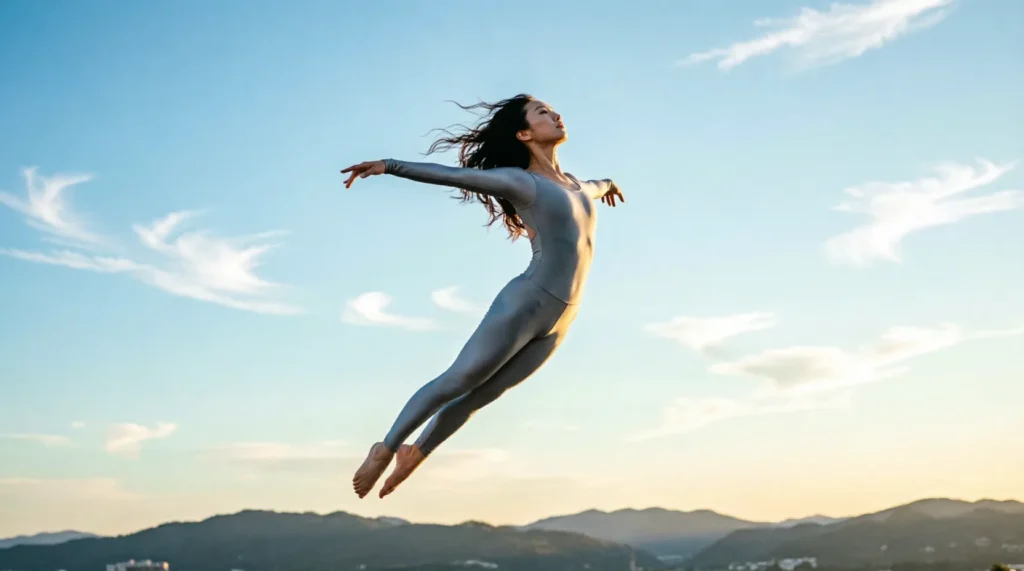
When you need to describe movement through space with impact, a well-chosen simile for flying through the air gives readers an instant sensory experience. The examples below are organized by mood and intensity so you can grab exactly what your scene needs—whether that’s the weightless joy of a child on a swing or the terrifying plunge of a diving hawk. Use these as-is or let them spark your own variations.
Joyful and Liberating Flight
These similes capture that intoxicating feeling of freedom, when gravity seems optional and the world opens up beneath you. They work beautifully in coming-of-age scenes, victory moments, or any time a character breaks free from constraints.
- “like a kite caught in a summer breeze” — “She launched off the dock, like a kite caught in a summer breeze, arms spread wide.” (carefree, nostalgic)
- “as light as dandelion seeds on the wind” — “The news lifted him, as light as dandelion seeds on the wind, and he felt he could float forever.” (gentle, hopeful)
- “like a child soaring off a swing at its highest point” — “He jumped, like a child soaring off a swing at its highest point, heart pounding with pure delight.” (exuberant, youthful)
- “as free as a hawk riding thermal currents” — “After the final exam, she walked out as free as a hawk riding thermal currents, ready for anything.” (triumphant, expansive)
- “like a leaf dancing in an updraft” — “The paper airplane spiraled upward, like a leaf dancing in an updraft, defying expectation.” (playful, whimsical)
- “as buoyant as a soap bubble rising” — “Her spirits lifted, as buoyant as a soap bubble rising, and she felt weightless.” (delicate, optimistic)
The swing comparison is the version my students always reach for first because it’s universally understood—everyone remembers that split-second of suspension. What makes it work is the specificity of “at its highest point,” which creates a precise visual moment rather than a vague feeling.
Swift and Powerful Movement
When your character or object isn’t just flying but racing through the air with force and purpose, these similes deliver velocity and impact. They’re perfect for action sequences, athletic descriptions, or moments of urgent escape.
- “like an arrow released from a drawn bow” — “The basketball arced toward the hoop, like an arrow released from a drawn bow, pure and true.” (focused, decisive)
- “as fast as a peregrine falcon in a dive” — “He sprinted and leaped, as fast as a peregrine falcon in a dive, covering ground with terrifying speed.” (fierce, unstoppable)
- “like a bullet tearing through the sky” — “The drone shot upward, like a bullet tearing through the sky, leaving nothing but a thin trail.” (aggressive, mechanical)
- “as swift as a swallow chasing insects” — “She darted across the room, as swift as a swallow chasing insects, impossible to catch.” (agile, natural)
- “like a spear hurled by a giant’s hand” — “The javelin flew, like a spear hurled by a giant’s hand, slicing the air with deadly precision.” (mythic, powerful)
- “as rapid as lightning splitting clouds” — “The acrobat launched herself, as rapid as lightning splitting clouds, a blur of motion.” (sudden, electrifying)
I’ll be honest: the bullet simile is overused in action writing and often feels lazy. According to Simile, effective comparisons create fresh connections, not recycled ones. Reach for the peregrine falcon instead—it’s specific, biologically accurate (they’re the fastest animals on Earth), and carries more texture than a generic projectile.
Graceful and Effortless Motion
Some flight looks so smooth it seems impossible, as if the laws of physics are merely suggestions. These similes work for dance sequences, elegant escapes, or any moment where movement transcends effort.
- “like a swan gliding just above the water” — “The ballerina leaped, like a swan gliding just above the water, every movement fluid and controlled.” (refined, serene)
- “as smooth as silk unfurling in wind” — “The parachute opened, as smooth as silk unfurling in wind, without a single jerk.” (gentle, luxurious)
- “like a heron lifting from a still pond” — “He rose from the crouch, like a heron lifting from a still pond, unhurried and deliberate.” (calm, poised)
- “as effortless as a feather finding its fall” — “She moved through the air, as effortless as a feather finding its fall, never fighting the current.” (natural, accepting)
- “like a ribbon swirling in a dancer’s hand” — “The scarf flew behind her, like a ribbon swirling in a dancer’s hand, painting the air.” (artistic, flowing)
- “as fluid as water spilling over stone” — “His body curved through space, as fluid as water spilling over stone, adapting to every shift.” (adaptive, organic)
The heron comparison is criminally underused. What makes it exceptional is the implied patience—herons don’t rush their takeoff, and that deliberateness creates a different kind of power than speed alone.
Wild and Untamed Flight
Not all flight is controlled or pretty. Sometimes movement through air is chaotic, dangerous, or rebellious. These similes capture that raw, unfiltered energy for scenes of panic, rage, or wild abandon.
- “like a moth battering against a windowpane” — “He threw himself forward, like a moth battering against a windowpane, desperate and frantic.” (desperate, trapped)
- “as chaotic as bats fleeing a disturbed cave” — “The papers scattered, as chaotic as bats fleeing a disturbed cave, spinning in every direction.” (panicked, disordered)
- “like a stone skipped across angry water” — “She bounded from rooftop to rooftop, like a stone skipped across angry water, never settling.” (reckless, urgent)
- “as wild as horses stampeding through a storm” — “His hair flew behind him, as wild as horses stampeding through a storm, untamed and fierce.” (fierce, uncontrolled)
- “like a tumbleweed caught in a dust devil” — “The hat spun away, like a tumbleweed caught in a dust devil, at the mercy of the wind.” (helpless, spinning)
- “as fierce as an eagle attacking its prey” — “She dove toward the ground, as fierce as an eagle attacking its prey, all focus and fury.” (predatory, intense)
The word “through” carries particular weight when describing movement across space, and Through explores how this preposition implies penetration and passage—exactly what these violent, uncontrolled movements embody.
Delicate and Whisper-Light Ascent
Sometimes flight is so subtle it’s almost invisible, a gentle rise that barely disturbs the air. These similes suit moments of quiet transformation, spiritual elevation, or fragile beauty.
- “like a breath fogging winter glass” — “Her words rose, like a breath fogging winter glass, visible for just a moment before vanishing.” (ephemeral, intimate)
- “as soft as a moth’s wing brushing skin” — “The butterfly lifted off, as soft as a moth’s wing brushing skin, barely there.” (tender, fleeting)
- “like smoke curling from extinguished candle” — “The memory drifted up, like smoke curling from extinguished candle, faint but persistent.” (nostalgic, fading)
- “as gentle as a petal falling upward” — “She seemed to float, as gentle as a petal falling upward, defying logic with grace.” (surreal, peaceful)
- “like a wish released into the night” — “The lantern ascended, like a wish released into the night, carrying hope with it.” (hopeful, ceremonial)
- “as quiet as snow settling on branches” — “He moved through the air, as quiet as snow settling on branches, making no sound.” (silent, natural)
Dramatic and Majestic Soaring
For moments that demand epic scale—heroic leaps, mythic transformations, or scenes that should feel larger than life—these similes deliver grandeur without tipping into purple prose.
- “like a phoenix rising from ashes” — “She emerged from the wreckage, like a phoenix rising from ashes, transformed and radiant.” (mythic, triumphant)
- “as magnificent as an eagle cresting a mountain” — “The plane cleared the peak, as magnificent as an eagle cresting a mountain, commanding the sky.” (majestic, dominant)
- “like a comet streaking across darkness” — “He flew through the night, like a comet streaking across darkness, brilliant and brief.” (spectacular, transient)
- “as awe-inspiring as wings spreading for first flight” — “The young bird launched itself, as awe-inspiring as wings spreading for first flight, a moment of pure becoming.” (transformative, powerful)
- “like a banner unfurling in a gale” — “The cape streamed behind her, like a banner unfurling in a gale, announcing her presence.” (bold, declarative)
- “as transcendent as a soul leaving the body” — “In that moment, he felt as transcendent as a soul leaving the body, unbound and infinite.” (spiritual, profound)
How to Write Your Own Flying Through the Air Simile
Creating original similes for flight doesn’t require genius—it requires observation and a simple three-step process.
Step 1: Identify the specific quality of the flight you’re describing. Is it fast? Slow? Scary? Joyful? Chaotic? Graceful? Name it precisely.
Step 2: Brainstorm objects, animals, or phenomena that share that quality. Don’t stop at the first answer (everyone thinks “bird”). Push to your third or fourth idea—that’s where originality lives.
Step 3: Test the comparison by reading it aloud. Does it create an instant image? Does it feel fresh, or does it sound like something you’ve read a hundred times?
Worked example: Let’s say you’re describing someone jumping off a diving board with hesitation. The quality is “reluctant but committed.” First ideas: like a scared cat, like a hesitant swimmer (too obvious). Push further: like a leaf that finally lets go of the branch, like a secret finally being told. The second option has unexpected texture—it connects physical movement to emotional release.
Frequently Asked Questions
What makes a flying simile effective versus clichéd? An effective simile creates a specific, sensory image that adds new information about how something flies, not just that it flies. “Like a bird” is clichéd because it’s vague—what bird? Doing what? “Like a hummingbird hovering at a feeder” gives you speed, precision, and purpose. The difference is specificity and freshness of the comparison.
Can I mix metaphors and similes in the same passage about flight? Yes, but carefully. If you write “she was a bird, soaring like freedom itself,” you’ve mixed a metaphor (she was a bird) with a simile (like freedom). This can work if intentional, but often creates confusion. My advice: pick one approach per paragraph and commit to it. Consistency creates clarity.
Are there similes for flying that work better in poetry versus prose? Generally, poetry can sustain more abstract or layered similes (“like time unspooling”) because readers expect density and multiple interpretations. Prose benefits from similes that advance plot or character (“like a spy escaping detection”) because they pull double duty. That said, literary prose can absolutely carry poetic similes—just ensure they serve the scene rather than derail it.
How do I avoid making my flying similes sound overwrought? Ground your similes in concrete, observable details rather than abstract emotions. Instead of “like pure joy given wings” (abstract, vague), try “like a kid launched from a trampoline” (concrete, visual). The best similes for flying through the air let readers see the movement, not just feel it intellectually. Trust images over declarations.

Ashley Moore, a passionate educator with a knack for storytelling, holds a Bachelor’s degree in Creative Writing from the University of Iowa. With a career spanning over a decade, Ashley has worked extensively as a writing coach and a literature curriculum developer. Her fascination with similes and their ability to paint vivid mental images has been a driving force in her career. Ashley believes that figurative language is the bridge between mundane communication and imaginative expression. On SimileCraft, she writes in-depth guides that demystify the use of similes and metaphors in writing, empowering budding authors to tap into their creative potential. Her interactive workshops and tutorials are crafted to inspire confidence in writers of all levels, as she aims to bring the excitement of figurative language to a broader audience.