

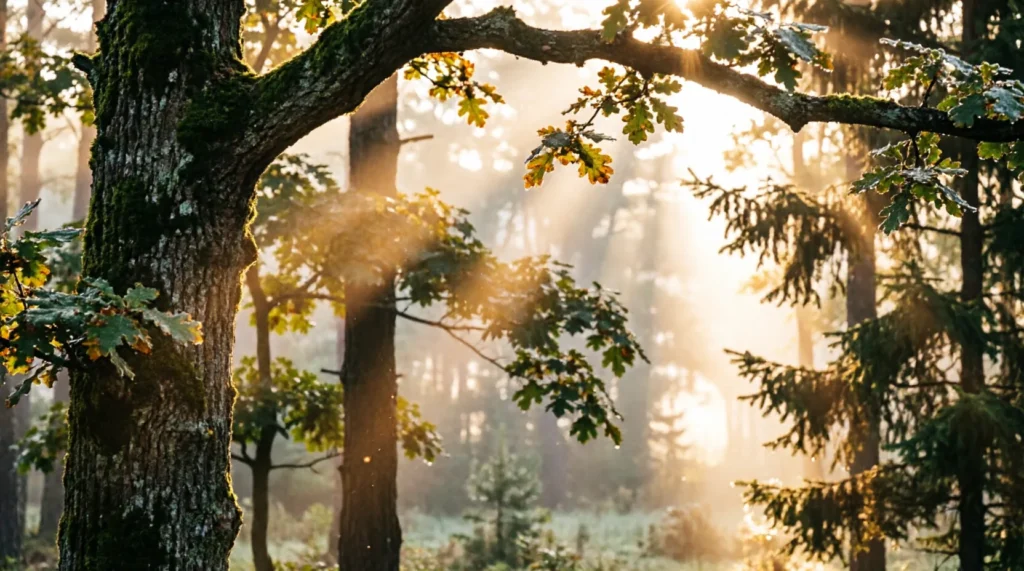
When you’re trying to capture how sunlight transforms a scene, a well-chosen simile can do what adjectives alone cannot—it creates an immediate, visceral connection for your reader. The examples below are organized by mood and intensity so you can find exactly the right comparison for your story, poem, or essay.
Warm and Gentle Sunlight
These similes work best when you’re describing comfort, safety, or a peaceful moment. They’re perfect for scenes of relaxation, childhood memories, or romantic interludes.
“like a mother’s hand on a fevered brow” — “The afternoon sun felt like a mother’s hand on a fevered brow, soothing and unhurried.” (nurturing, tender)
“as soft as worn flannel” — “Winter sunlight streamed through the window as soft as worn flannel against bare skin.” (cozy, familiar)
Craft note: This one works because it engages touch rather than sight—the unexpected sensory shift makes it memorable.
“like honey poured slowly from a jar” — “Morning light filled the kitchen like honey poured slowly from a jar, thick and golden.” (luxurious, slow-moving)
“as gentle as a sigh” — “The evening sun touched her face as gentle as a sigh, barely there but deeply felt.” (delicate, intimate)
“like fresh-baked bread warmth” — “Sunlight pooled on the wooden floor like fresh-baked bread warmth, inviting and nourishing.” (homey, comforting)
“as kind as an old friend’s smile” — “That late autumn sun shone as kind as an old friend’s smile, knowing and accepting.” (welcoming, nostalgic)
“like a blanket fresh from the dryer” — “The spring sunshine wrapped around us like a blanket fresh from the dryer, warm and clean-smelling.” (inviting, pure)
“as tender as a first kiss” — “Sunlight filtered through the leaves as tender as a first kiss, hesitant but full of promise.” (romantic, sweet)
Intense and Blazing Sun
Use these when you need to convey heat, power, or even discomfort. They’re ideal for desert scenes, summer afternoons, or moments of harsh revelation.
“like a furnace door left ajar” — “The midday sun beat down like a furnace door left ajar, relentless and unforgiving.” (oppressive, dangerous)
Craft note: The specificity of “left ajar” rather than just “open” creates a more menacing image—it suggests carelessness, not just heat.
“as fierce as a dragon’s breath” — “The desert sun blazed as fierce as a dragon’s breath, turning sand to glass.” (mythic, powerful)
“like a branding iron” — “That July sun pressed against our backs like a branding iron, leaving its mark on everything.” (painful, permanent)
“as unrelenting as a drill sergeant” — “The equatorial sun shone as unrelenting as a drill sergeant, allowing no shade, no mercy.” (authoritative, exhausting)
“like molten gold poured from the sky” — “Noon sunlight flooded the street like molten gold poured from the sky, beautiful but deadly.” (intense, dual-natured)
“as harsh as fluorescent lights” — “The summer sun glared down as harsh as fluorescent lights in an interrogation room, exposing every flaw.” (clinical, unforgiving)
“like a spotlight on a stage” — “The afternoon sun pinned her to the sidewalk like a spotlight on a stage, inescapable and exposing.” (confining, theatrical)
“as punishing as a whip” — “The Saharan sun struck as punishing as a whip, driving us toward the distant oasis.” (violent, urgent)
Golden and Radiant Light
These similes emphasize beauty, value, and transformation. They work well for magical realism, celebratory moments, or descriptions of natural splendor.
“like coins spilled from a treasure chest” — “Sunlight dappled the forest floor like coins spilled from a treasure chest, precious and scattered.” (valuable, abundant)
Craft note: The word “spilled” adds movement and slight chaos to what could be a static image—it feels more alive.
“as brilliant as a crown jewel” — “The morning sun broke through the clouds as brilliant as a crown jewel, commanding attention.” (regal, magnificent)
“like liquid amber” — “Evening light poured through the windows like liquid amber, preserving the moment in golden clarity.” (timeless, rich)
“as luminous as a saint’s halo” — “The sunrise glowed as luminous as a saint’s halo, inspiring awe and reverence.” (spiritual, ethereal)
“like gilding on an ancient manuscript” — “Sunlight touched the mountain peaks like gilding on an ancient manuscript, highlighting what mattered.” (artistic, selective)
“as radiant as a bride’s smile” — “The spring sun shone as radiant as a bride’s smile, full of hope and new beginnings.” (joyful, optimistic)
“like a Midas touch” — “Wherever the sun fell, it transformed the ordinary like a Midas touch, turning everything to gold.” (magical, transformative)
“as dazzling as a diamond in sunlight” — “The reflected light sparkled as dazzling as a diamond in sunlight, almost too bright to look at directly.” (brilliant, overwhelming)
Morning and Awakening Sun
These capture beginnings, hope, and renewal. Perfect for opening chapters, new relationships, or scenes of personal growth.
“like a yawn stretching across the sky” — “Dawn arrived like a yawn stretching across the sky, slow and inevitable.” (gradual, natural)
“as fresh as morning dew” — “The early sun felt as fresh as morning dew on grass, clean and full of possibility.” (pure, hopeful)
“like the first page of a new book” — “Morning sunlight spilled across my desk like the first page of a new book, full of unwritten potential.” (promising, blank-slate)
“as crisp as a newly-pressed shirt” — “Winter morning sun shone as crisp as a newly-pressed shirt, sharp and clean.” (precise, refreshing)
“like a curtain being drawn” — “The sun rose like a curtain being drawn, revealing the day’s performance.” (theatrical, anticipatory)
“as hopeful as a seedling breaking soil” — “That first spring sun warmed the earth as hopeful as a seedling breaking soil, determined and brave.” (resilient, optimistic)
“like an alarm clock for the world” — “Morning light burst through the clouds like an alarm clock for the world, insistent and energizing.” (urgent, awakening)
Setting and Fading Sunlight
These evoke endings, nostalgia, and transition. Use them for closing scenes, reflections, or moments of bittersweet beauty.
“like a memory losing its edges” — “The sunset faded like a memory losing its edges, soft and indistinct.” (nostalgic, melancholic)
Craft note: This simile works on multiple levels—both the visual softening of light and the emotional quality of fading memory create resonance.
“as reluctant as a guest who won’t leave” — “The evening sun lingered on the horizon as reluctant as a guest who won’t leave, stretching the moment.” (prolonged, wistful)
“like the last note of a sad song” — “Dusk arrived like the last note of a sad song, beautiful but leaving you hollow.” (poignant, lingering)
“as tired as an old man’s hands” — “The afternoon sun weakened as tired as an old man’s hands, still warm but losing strength.” (gentle, declining)
“like embers cooling in a fire” — “The sun’s glow dimmed like embers cooling in a fire, still warm but fading to gray.” (dying, peaceful)
“as wistful as a goodbye wave” — “The setting sun colored the clouds as wistful as a goodbye wave, beautiful because it’s ending.” (bittersweet, tender)
“like a book closing softly” — “Daylight retreated like a book closing softly, the story finished for now.” (final, satisfying)
How to Write Your Own Sun Simile
Creating original similes for sunlight is simpler than you might think. Here’s my three-step process that I teach in every workshop:
Step 1: Identify the specific quality of sunlight you want to capture. Is it the temperature? The color? The way it moves? The emotional effect it has? Don’t try to describe “sunlight” generally—that’s too broad.
Step 2: Brainstorm objects, sensations, or experiences that share that quality. If you’re describing harsh midday sun, think about things that are intense, inescapable, or overwhelming. If it’s gentle morning light, consider things that are soft, new, or hopeful.
Step 3: Test your comparison by asking: Does this create a clear image? Does it evoke the right feeling? Is it fresh, or has it been overused?
Worked example: Let’s say you want to describe sunlight filtering through dusty windows in an old house.
- Quality: The way light makes dust visible, creating movement and texture
- Brainstorm: Snow globe, theater spotlight, underwater scene, old film projector
- Final simile: “Sunlight cut through the attic window like a spotlight in a dusty theater, making every particle of air visible.”
The key is specificity. “Like a spotlight” alone is weak. “Like a spotlight in a dusty theater” creates a complete scene.
Frequently Asked Questions
What makes a sun simile effective versus clichéd?
An effective sun simile creates a specific, unexpected connection that illuminates both the sunlight and the thing you’re comparing it to. Clichés like “bright as the sun” or “hot as the sun” are circular—they use the sun to describe the sun. Instead, compare sunlight to something from a different sensory realm or context entirely. The version my students always reach for first is “like gold,” which isn’t wrong, but it’s tired. Push further: what kind of gold? Molten? Tarnished? Gilded?
Can I use similes for the sun in academic or professional writing?
Yes, but strategically. In creative nonfiction, literary journalism, or personal essays, well-placed similes add voice and engagement. According to Simile, this figure of speech creates vivid imagery through comparison, which can make complex or abstract concepts more accessible. However, in technical writing, scientific reports, or formal business documents, similes can undermine credibility. Know your audience and purpose.
How many similes should I use in a single piece of writing?
Less is more. One perfectly-chosen simile per scene or section is usually enough. Multiple similes in quick succession can feel overwritten and distract from your story. I tell my students: if you’re tempted to use three similes in one paragraph, choose the strongest one and cut the other two. Your writing will be more powerful for it.
What’s the difference between describing sunlight and describing the sun itself?
Great question. When you describe the sun as an object in the sky, you’re focusing on its appearance as a celestial body—its size, position, color as a disk. When you describe sunlight, you’re capturing its effect—how it interacts with the world, what it does to surfaces, atmosphere, and mood. According to Describe, effective description engages multiple senses and shows impact rather than just listing attributes. Most writers find sunlight easier to work with because it’s relational; it reveals character and setting through interaction.

William Garcia is a distinguished linguist with over 15 years of experience in the realm of literary arts and education. With a Master’s degree in English Literature from Columbia University, William has dedicated his career to unraveling the beauty of language, particularly focusing on similes and figurative expressions. He discovered his passion for this field during his undergraduate studies when a professor’s insightful analysis of Shakespeare’s use of metaphors sparked his interest. William has since authored numerous articles exploring the depth and impact of figurative language in classic and contemporary texts. At SimileCraft, William combines his academic rigor with a passion for teaching, creating engaging content that helps both new learners and seasoned writers enhance their understanding of metaphorical language. His analytical pieces often delve into the historical progression of similes and their influence on modern literature.