

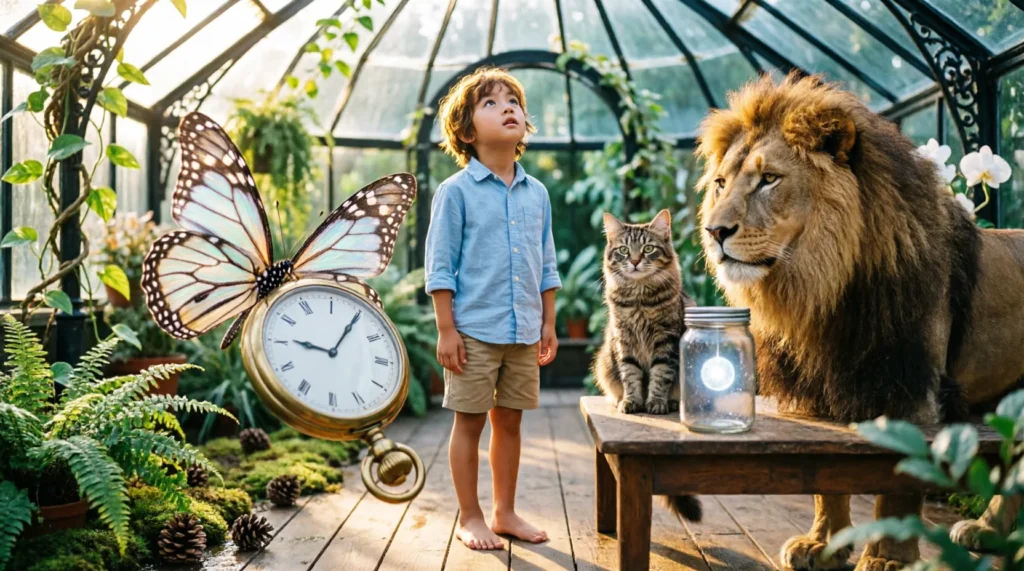
Similes and metaphors are the secret ingredients that transform flat, ordinary sentences into writing that sparkles with imagination. For fourth graders, mastering these figurative language tools opens up a whole new way to describe the world around them. In this guide, you’ll find carefully categorized examples ready to use in stories, poems, and school assignments—each one shown in context so you can see exactly how it works.
What Is a Simile?
A simile is a figure of speech that compares two different things using the words “like” or “as.” It’s one of the most accessible ways for young writers to add color and depth to their descriptions. According to Wikipedia’s entry on Simile, similes create vivid imagery by drawing explicit comparisons that help readers visualize what you’re describing.
The key difference between a simile and a metaphor is that a simile always uses “like” or “as” to make the comparison, while a metaphor states that one thing is another thing. For example, “Her smile was like sunshine” is a simile, but “Her smile was sunshine” is a metaphor. Both create powerful images, but similes are often easier for fourth graders to grasp and use confidently.
Similes and Metaphors for Describing People
When we describe people in our stories, we want readers to really see them. These comparisons help you capture personality, appearance, and mood in just a few words.
“as brave as a lion” — “Marcus stepped up to the microphone, as brave as a lion, even though his knees were shaking.” (confident, admiring)
“quick as a whip” — “When the teacher asked a question, Jenna’s hand shot up quick as a whip.” (energetic, sharp)
“smart as a whip” — “My older sister is smart as a whip; she finished the puzzle in five minutes.” (impressed, respectful)
“stubborn as a mule” — “Dad is stubborn as a mule when it comes to changing his mind about pizza toppings.” (playful frustration)
“gentle as a lamb” — “Even though he’s the biggest kid in class, Tyler is gentle as a lamb with the hamsters.” (tender, surprising)
“busy as a bee” — “Mom was busy as a bee all Saturday, cleaning, cooking, and driving us to soccer.” (admiring, slightly overwhelmed)
“sly as a fox” — “My little brother is sly as a fox when he’s trying to sneak cookies before dinner.” (amused, knowing)
Craft note: “Gentle as a lamb” works because of the soft ‘l’ sounds that mirror the gentleness being described—the language itself feels tender.
“strong as an ox” — “The new kid in gym class is strong as an ox; he lifted the heaviest weight without breaking a sweat.” (impressed, maybe intimidated)
“quiet as a mouse” — “During the test, the classroom was quiet as a mouse.” (focused, tense)
“happy as a clam” — “When she got the puppy she wanted, Emma was happy as a clam.” (pure joy, contentment)
I’ll be honest with you: “busy as a bee” and “quiet as a mouse” are so overused that they’ve lost their punch. Your readers have seen them a thousand times. Instead, try “busy as a short-order cook” or “quiet as a library at midnight”—same idea, fresher image.
Similes and Metaphors for Emotions and Feelings
Fourth grade is when emotions get complicated, and writing about them becomes both harder and more important. These comparisons give you the words for feelings that are difficult to describe directly.
“mad as a hornet” — “When someone took his seat, Jake was mad as a hornet.” (furious, buzzing with anger)
“sad as a rainy day” — “After her best friend moved away, Lily felt sad as a rainy day.” (melancholy, gray)
“excited as a kid on Christmas morning” — “The whole class was excited as a kid on Christmas morning when the principal announced the field trip.” (bubbling anticipation)
“nervous as a long-tailed cat in a room full of rocking chairs” — “Before my piano recital, I was nervous as a long-tailed cat in a room full of rocking chairs.” (extremely anxious, vivid)
Craft note: This longer simile is worth the extra words because the specific image creates genuine tension—you can actually picture the cat’s panic.
“proud as a peacock” — “After winning the science fair, David strutted around proud as a peacock.” (showy, triumphant)
“confused as a lost puppy” — “When the teacher gave us the new math problem, I felt confused as a lost puppy.” (bewildered, helpless)
“calm as a cucumber” — “Even during the fire drill, Mrs. Chen stayed calm as a cucumber.” (unflappable, reassuring)
“scared stiff” — “When the lights went out, I was scared stiff.” (frozen with fear)
According to Wikipedia’s article on Metaphor, metaphors can convey emotional states more directly than literal language because they bypass explanation and create immediate understanding. That’s why “my heart is a drum” hits harder than “my heart is beating fast.”
“on cloud nine” — “When she made the team, Sarah was on cloud nine for a week.” (ecstatic, floating)
“feeling blue” — “After losing the game, the whole team was feeling blue.” (dejected, downcast)
“butterflies in my stomach” — “Before the spelling bee, I had butterflies in my stomach.” (nervous anticipation)
Skip “feeling blue”—it’s tired. Try “gray as a storm cloud” or “heavy as a wet blanket” instead. Your writing will stand out.
Similes and Metaphors for School and Learning
School is where fourth graders spend most of their waking hours, so having fresh ways to describe learning experiences makes writing assignments much more engaging.
“brain like a sponge” — “My little sister’s brain is like a sponge; she remembers every song after hearing it once.” (absorbent, impressive)
“sharp as a tack” — “Ask Maya anything about dinosaurs—she’s sharp as a tack when it comes to facts.” (mentally quick, knowledgeable)
“light bulb moment” — “When I finally understood long division, it was a light bulb moment.” (sudden understanding, clarity)
“knowledge is power” — “My dad always says knowledge is power, which is why he reads every night.” (empowering, motivational)
“mind like a steel trap” — “Grandpa has a mind like a steel trap; he remembers what we had for lunch three weeks ago.” (excellent memory, precise)
“bookworm” — “My best friend is such a bookworm that she reads under the covers with a flashlight.” (devoted reader, passionate)
“racking my brain” — “I was racking my brain trying to remember where I put my homework.” (frustrated searching, mental effort)
Craft note: “Light bulb moment” works because it’s visual and universal—everyone has seen that cartoon image of an idea appearing, so the metaphor instantly communicates sudden understanding.
“cramming like crazy” — “The night before the test, we were cramming like crazy.” (frantic studying, last-minute)
“easy as pie” — “Once I learned the trick, the math problem was easy as pie.” (simple, effortless)
“hard nut to crack” — “That science project was a hard nut to crack, but we finally figured it out.” (challenging puzzle, persistent effort)
Similes and Metaphors for Nature and Animals
Nature gives us endless comparison material because animals and weather have such distinctive characteristics. These are perfect for descriptive writing and poetry.
“free as a bird” — “When school let out for summer, I felt free as a bird.” (liberated, soaring)
“sly as a fox” — “The raccoon was sly as a fox, sneaking into our garbage without making a sound.” (clever, stealthy)
“strong as an ox” — “The draft horse pulled the wagon, strong as an ox.” (powerful, dependable)
“quick as lightning” — “The hummingbird darted from flower to flower, quick as lightning.” (blazing fast, electric)
“slow as molasses” — “On Monday morning, time moved slow as molasses.” (dragging, tedious)
“bright as the sun” — “Her smile was bright as the sun, lighting up the whole room.” (radiant, warm)
“dark as night” — “The basement was dark as night; I couldn’t see my own hand.” (pitch black, ominous)
“cold as ice” — “The lemonade was cold as ice on that hot July day.” (refreshing, freezing)
“hot as an oven” — “The playground was hot as an oven; the slides burned my legs.” (scorching, uncomfortable)
“fresh as a daisy” — “After a good night’s sleep, I woke up fresh as a daisy.” (renewed, crisp)
Craft note: “Quick as lightning” pairs a sharp ‘qu’ sound with the explosive ‘l’ of lightning, creating a sonic speed that matches the meaning.
“steady as a rock” — “Even when everyone else panicked, our team captain stayed steady as a rock.” (reliable, unmoving)
Avoid “cold as ice” and “hot as an oven”—they’re so common they barely register anymore. Try “cold as a polar bear’s toenails” or “hot as a dragon’s breath” for comparisons that actually make readers pause.
How to Write Your Own Simile or Metaphor
Creating your own comparisons is easier than you think. Here’s my three-step process that I’ve taught to thousands of fourth graders:
Step 1: Identify the quality you want to highlight. Is it speed? Size? Emotion? Color? Be specific. Instead of “I want to describe my dog,” think “I want to show how excited my dog gets.”
Step 2: Brainstorm things that share that quality. If your dog is excited, what else is excited? A kid at a birthday party? A puppy seeing a leash? A popcorn kernel about to pop?
Step 3: Connect them using “like” or “as” for similes, or “is/was” for metaphors. Test it out loud—does it sound natural? Does it create a picture?
Worked Example:
- Quality: My sister talks a lot
- Brainstorm: What talks a lot or never stops? A radio that won’t turn off. A broken record. A motor that won’t quit.
- Simile: “My sister talks like a radio that won’t turn off.”
- Metaphor: “My sister is a broken record on repeat.”
The metaphor version is stronger here because it’s shorter and punchier. That broken record image sticks with you.
Frequently Asked Questions
What’s the easiest way to remember the difference between similes and metaphors?
Similes use “like” or “as”—think “S” for “similar” (not the same). Metaphors say one thing is another—they’re more direct and confident. If you can add “like” or “as” to the sentence, it’s probably a simile.
Are there any similes or metaphors I should never use?
Yes! Avoid comparisons that are offensive or make fun of people’s appearance, abilities, or backgrounds. Also skip comparisons you don’t understand just because they sound fancy. The best figurative language comes from things you know well. And definitely avoid clichés like “pretty as a picture” or “smart as a whip”—they’re so worn out they don’t create any image at all.
How many similes and metaphors should I use in one piece of writing?
For fourth grade writing, 2-4 well-chosen comparisons are perfect. More than that and your writing starts to feel forced. Think of similes and metaphors like hot sauce—a little makes everything better, but too much ruins the meal. Place them where they’ll have the most impact, usually when describing something important or emotional.
Can I make up my own similes and metaphors, or do I have to use ones I’ve heard before?
Please make up your own! The best writers create fresh comparisons that no one has heard before. “Busy as a bee” has been used for hundreds of years. But “busy as a squirrel planning for winter”? That’s yours, and it’s way more interesting. Your unique perspective is what makes your writing special.

Ashley Moore, a passionate educator with a knack for storytelling, holds a Bachelor’s degree in Creative Writing from the University of Iowa. With a career spanning over a decade, Ashley has worked extensively as a writing coach and a literature curriculum developer. Her fascination with similes and their ability to paint vivid mental images has been a driving force in her career. Ashley believes that figurative language is the bridge between mundane communication and imaginative expression. On SimileCraft, she writes in-depth guides that demystify the use of similes and metaphors in writing, empowering budding authors to tap into their creative potential. Her interactive workshops and tutorials are crafted to inspire confidence in writers of all levels, as she aims to bring the excitement of figurative language to a broader audience.