

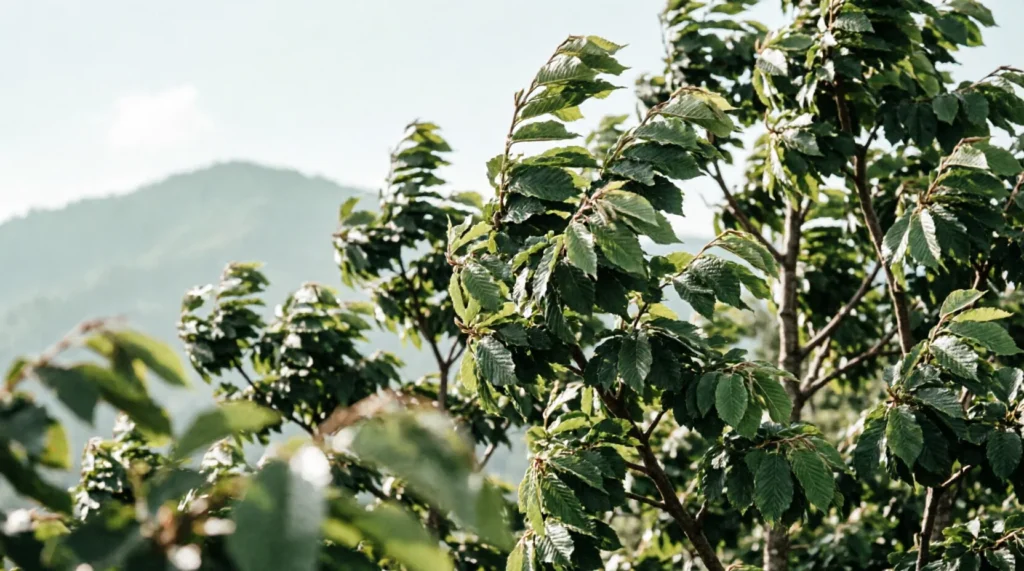
Similes for trees blowing in the wind help you capture the movement, mood, and music of nature in motion. The examples below are organized by feeling and intensity so you can find the perfect comparison for your scene, whether it’s a gentle breeze or a raging storm.
Gentle and Peaceful Movements
These similes work best for calm scenes, morning light, and moments of tranquility. I use these constantly in pastoral writing and quiet opening chapters.
“like a slow exhale” — “The pines swayed like a slow exhale, releasing the day’s tension.” (serene, meditative)
“as gentle as a mother’s hand” — “The willow branches moved as gentle as a mother’s hand rocking a cradle.” (tender, nurturing)
“like breath on glass” — “The aspen leaves trembled like breath on glass, barely there but visible.” (delicate, fleeting)
“as soft as whispered secrets” — “The oaks stirred as soft as whispered secrets passing between old friends.” (intimate, hushed)
“like silk unfurling” — “The birch branches waved like silk unfurling in slow motion.” (elegant, smooth)
“as calm as a sleeping child” — “The maple moved as calm as a sleeping child, peaceful and unhurried.” (tranquil, innocent)
“like watercolor bleeding on wet paper” — “The elm’s shadow shifted like watercolor bleeding on wet paper, soft at the edges.” (artistic, dreamy)
“as light as dandelion fluff” — “The young saplings bent as light as dandelion fluff catching the breeze.” (weightless, carefree)
Wild and Violent Motion
When the wind turns dangerous or the scene demands intensity, these similes deliver raw power. These are my go-to choices for storm sequences and climactic moments.
“like a ship in a gale” — “The ancient oak thrashed like a ship in a gale, fighting to stay upright.” (desperate, powerful)
“as violent as a seizure” — “The dead branches snapped as violent as a seizure, jerking without rhythm.” (chaotic, alarming)
“like a drunk stumbling home” — “The pine swayed like a drunk stumbling home, unpredictable and unsteady.” (uncontrolled, dangerous)
“as fierce as a caged animal” — “The forest roared as fierce as a caged animal, clawing at the sky.” (primal, trapped rage)
“like flags of surrender” — “The weaker trees bent like flags of surrender, yielding to the wind’s demand.” (defeated, overwhelmed)
“as frantic as a drowning swimmer” — “The branches flailed as frantic as a drowning swimmer, grasping at nothing.” (panicked, desperate)
“like a thousand whips cracking” — “The thin branches snapped like a thousand whips cracking in the air.” (sharp, aggressive)
“as relentless as a hammer” — “The wind pounded the trees as relentless as a hammer, blow after blow.” (punishing, unyielding)
Craft note: “Like a ship in a gale” works because it immediately conjures scale and danger—readers understand both the size of the tree and the threat it faces. This is the version my students always reach for first when writing storm scenes, and for good reason.
Graceful and Dance-Like
These similes capture the beauty and rhythm of trees in motion. I recommend these for romantic scenes, spring descriptions, and any moment requiring elegance.
“like ballerinas en pointe” — “The birches swayed like ballerinas en pointe, graceful and precise.” (refined, artistic)
“as fluid as a waltz” — “The forest moved as fluid as a waltz, each tree finding its partner in the breeze.” (harmonious, romantic)
“like ribbons in a maypole dance” — “The willow branches twisted like ribbons in a maypole dance, weaving patterns in the air.” (playful, celebratory)
“as elegant as a bow” — “The cherry blossoms dipped as elegant as a bow, acknowledging an invisible audience.” (courteous, poised)
“like a slow-motion wave” — “The entire grove rippled like a slow-motion wave, one tree following the next.” (synchronized, mesmerizing)
“as poised as a dancer’s arabesque” — “The lone pine held its position as poised as a dancer’s arabesque, balanced on the edge of motion.” (controlled, suspended)
“like silk scarves in a breeze” — “The young leaves fluttered like silk scarves in a breeze, catching the light.” (luxurious, bright)
“as rhythmic as a heartbeat” — “The forest swayed as rhythmic as a heartbeat, steady and alive.” (vital, comforting)
Craft note: “Like ribbons in a maypole dance” creates instant visual specificity—the reader sees the interweaving motion, not just generic swaying. This level of detail separates strong similes from lazy ones.
Musical and Rhythmic
When you need to emphasize sound alongside movement, these similes bring the auditory dimension to life. Perfect for immersive nature writing.
“like an orchestra tuning up” — “The forest hummed like an orchestra tuning up, each tree finding its note.” (chaotic beauty, anticipation)
“as melodic as wind chimes” — “The bamboo clattered as melodic as wind chimes, creating music from motion.” (pleasant, musical)
“like pages turning in an old book” — “The dry leaves rustled like pages turning in an old book, whispering stories.” (nostalgic, narrative)
“as harmonious as a choir” — “The pines sang as harmonious as a choir, their voices blending in the wind.” (unified, spiritual)
“like a thousand tiny hands clapping” — “The aspen leaves trembled like a thousand tiny hands clapping, celebrating the breeze.” (joyful, enthusiastic)
“as percussive as rain on a tin roof” — “The branches tapped as percussive as rain on a tin roof, creating rhythm from chaos.” (textured, lively)
“like a whispered conversation” — “The forest murmured like a whispered conversation, secrets passing leaf to leaf.” (intimate, mysterious)
“as syncopated as jazz” — “The oaks moved as syncopated as jazz, unexpected beats in the wind’s song.” (complex, improvisational)
According to Wikipedia’s article on Simile, effective comparisons create “a vivid image in the mind of the reader” by linking the unfamiliar to the familiar. These musical similes work because everyone knows the sound of wind chimes or pages turning, making the tree’s movement instantly recognizable. For more, see Blowing.
Mysterious and Eerie
For horror, suspense, or gothic atmospheres, these similes transform ordinary wind into something unsettling. I use these sparingly—they’re powerful but can feel heavy-handed if overused.
“like skeletal fingers grasping” — “The bare branches clawed like skeletal fingers grasping at the moon.” (sinister, deathly)
“as ghostly as a specter’s touch” — “The willow moved as ghostly as a specter’s touch, there and not there.” (ethereal, haunting)
“like a warning finger raised” — “The lone tree bent like a warning finger raised against the coming storm.” (ominous, prophetic)
“as unnatural as a marionette” — “The branches jerked as unnatural as a marionette, pulled by invisible strings.” (controlled, creepy)
“like a crowd of whispering conspirators” — “The forest huddled like a crowd of whispering conspirators, sharing dark secrets.” (suspicious, threatening)
“as cold as a grave’s breath” — “The wind moved through the pines as cold as a grave’s breath, carrying winter’s promise.” (chilling, final)
“like a beckoning hand” — “The branches reached like a beckoning hand, inviting travelers into darkness.” (seductive, dangerous)
“as watchful as a predator’s gaze” — “The forest shifted as watchful as a predator’s gaze, tracking every movement.” (alert, threatening)
Craft note: “Like skeletal fingers grasping” is overused in horror writing—I see it in at least half the student manuscripts I read. It works, but it’s tired. Try “like a warning finger raised” instead; it’s fresher and carries the same menace with more specificity.
Powerful and Majestic
These similes emphasize strength, age, and grandeur. Use them for ancient forests, heroic moments, and scenes requiring awe.
“like a king’s banner” — “The great oak stood firm, its branches streaming like a king’s banner in the wind.” (regal, commanding)
“as mighty as an army marching” — “The forest moved as mighty as an army marching, unified and unstoppable.” (forceful, organized)
“like the pillars of a cathedral” — “The redwoods swayed like the pillars of a cathedral, sacred and eternal.” (reverent, monumental)
“as enduring as stone” — “The ancient yew bent as enduring as stone, weathering centuries of wind.” (resilient, timeless)
“like waves against a cliff” — “The wind battered the trees like waves against a cliff, relentless but futile.” (powerful, defiant)
“as dignified as an elder’s nod” — “The old maple bowed as dignified as an elder’s nod, acknowledging the wind’s presence.” (respectful, measured)
“like a giant’s slow breath” — “The forest stirred like a giant’s slow breath, massive and deliberate.” (enormous, deliberate)
“as commanding as a general’s gesture” — “The tallest pine directed the wind as commanding as a general’s gesture, shaping the storm’s path.” (authoritative, controlling)
Craft note: “Like the pillars of a cathedral” elevates the scene beyond mere description—it adds spiritual weight. This is my strongest recommendation for any passage requiring reverence or awe.
How to Write Your Own Tree-and-Wind Simile
Creating original similes takes practice, but the process is straightforward. Here’s my three-step method that I teach in every workshop:
Step 1: Identify the specific quality you want to emphasize. Is it the speed, the sound, the violence, the grace? Don’t try to capture everything—pick one dominant feature.
Step 2: Brainstorm comparisons from a different category. If you’re describing movement, think about music, fabric, animals, or human gestures. The more distant the categories, the more surprising the simile.
Step 3: Test it aloud. A good simile has rhythm and clarity. If you stumble reading it, your reader will too.
Worked example: Let’s say you want to describe a gentle breeze moving through young leaves. The quality is “gentle, barely-there movement.” Brainstorming across categories: a sleeping breath, a shy gesture, light fabric, a soft sound. “Like a shy child’s wave” captures the tentative, small motion while adding emotional resonance. Test: “The young leaves moved like a shy child’s wave.” It scans well, creates an image, and feels fresh.
Frequently Asked Questions
What’s the difference between a simile and a metaphor for trees in wind?
A simile uses “like” or “as” to compare (the trees swayed like dancers), while a metaphor states the comparison directly (the trees were dancers in the wind). Similes are clearer and safer for beginning writers; metaphors are bolder but risk confusion if the connection isn’t obvious.
Which tree-and-wind similes should I avoid as clichés?
“Danced in the wind” is exhausted—it appears in everything from greeting cards to bad poetry. “Whispered secrets” is nearly as worn out. “Like a wave” is acceptable but generic. Instead, reach for specificity: what kind of dance? What kind of wave? The more precise your comparison, the fresher it feels.
Can I mix multiple similes for the same tree in one paragraph?
Yes, but sparingly. One strong simile per paragraph is usually enough. If you use two, make sure they complement rather than contradict each other. Don’t describe a tree as “gentle as a mother’s hand” and then “violent as a seizure” in the same scene unless the wind itself is changing dramatically.
How do I choose between a gentle simile and a violent one?
Let the scene’s emotional tone guide you. A gentle simile reinforces peace, safety, or beauty. A violent simile creates tension, danger, or chaos. Match the simile to what you want the reader to feel, not just what you’re describing. The wind might be the same, but your simile determines whether it’s comforting or threatening.

Brandon Robinson is a literary enthusiast and seasoned editor with a deep-rooted passion for figurative language and its transformative power in storytelling. He completed his Ph.D. in Linguistics from the University of Chicago, specializing in the cognitive impact of metaphors and similes in narrative construction. With over 18 years in the publishing industry, Brandon has helped shape numerous literary works by providing his expertise in metaphorical nuance and creative expression. His journey into the world of similes began when a high school poetry class opened his eyes to the elegance of figurative comparisons. At SimileCraft, Brandon writes thought-provoking essays that explore the cognitive science behind similes, while also curating content that inspires writers to use these tools more effectively. His pieces are a blend of scholarly insight and practical advice, tailored for an audience eager to deepen their literary skills.