

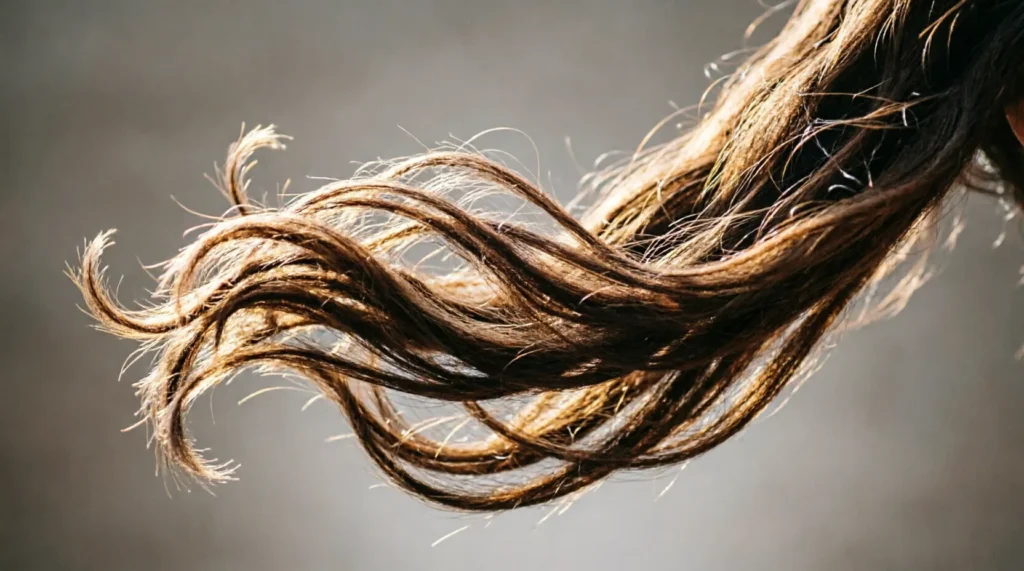
When you’re trying to capture the movement of hair caught in a breeze, a strong metaphor can convey freedom, chaos, or grace in a single phrase. The examples below are organized by mood and intensity, each shown in a real sentence so you can drop them straight into your poem, story, or song lyric. I’ve workshopped thousands of student descriptions of wind and hair, and these are the metaphors that consistently land with readers.
What Is a Metaphor?
A metaphor is a figure of speech that describes something by stating it is something else, creating an implicit comparison without using “like” or “as.” According to the Wikipedia entry on Metaphor, this direct equation creates a more powerful, immediate image than a simile, which uses “like” or “as” to make comparisons explicit. Where a simile says “her hair was like a flag,” a metaphor declares “her hair was a flag” — the removal of the comparative word tightens the image and demands the reader accept the equivalence. This makes metaphors especially effective for capturing fleeting moments, like hair caught mid-motion in the wind.
Gentle and Graceful Metaphors
These metaphors work beautifully for scenes of calm, romance, or peaceful movement. They suggest softness and natural flow.
“Her hair was a silk banner” — “Standing on the cliff, her hair was a silk banner catching the ocean breeze.” (elegant, serene) Craft note: The alliteration of “silk” and “banner” creates a soft S sound that mirrors the gentle movement being described.
“His hair was liquid shadow” — “As he turned, his hair was liquid shadow pouring over his shoulders.” (mysterious, smooth)
“Her hair was a river of gold” — “In the afternoon light, her hair was a river of gold winding down her back.” (warm, luminous) This is the version my students always reach for first when describing blonde hair in sunlight — it’s classic because it works.
“His hair was smoke” — “Walking away, his hair was smoke dissolving into the evening air.” (ethereal, fading)
“Her hair was a waterfall” — “She shook her head and her hair was a waterfall cascading around her face.” (flowing, abundant)
“His hair was a dark cloud” — “Under the streetlamp, his hair was a dark cloud drifting in the night breeze.” (moody, soft)
“Her hair was spun sugar” — “The wind caught her hair, and it was spun sugar dissolving in the air.” (delicate, sweet)
“His hair was ink in water” — “As he ran, his hair was ink in water, spreading and blending with the wind.” (artistic, fluid)
Wild and Untamed Metaphors
Use these when you need to convey chaos, rebellion, or raw energy. These metaphors suggest hair that refuses to be controlled.
“Her hair was a storm” — “She stepped outside and her hair was a storm, wild and untamed.” (powerful, chaotic) Craft note: This metaphor works because storms are both beautiful and destructive, capturing the dual nature of wild hair.
“His hair was a lion’s mane” — “Running through the field, his hair was a lion’s mane, fierce and free.” (bold, primal)
“Her hair was a wildfire” — “The gust hit and her hair was a wildfire, spreading chaos in every direction.” (intense, unstoppable)
“His hair was a black flag of rebellion” — “In the wind, his hair was a black flag of rebellion against conformity.” (defiant, symbolic)
“Her hair was Medusa’s snakes” — “She turned and her hair was Medusa’s snakes, writhing and alive.” (mythic, dangerous) I tell my students this one is overused in fantasy writing — skip it unless you’re specifically invoking Greek mythology.
“His hair was a tempest” — “On the deck of the ship, his hair was a tempest matching the sea.” (dramatic, nautical)
“Her hair was an explosion” — “The wind caught her hair and it was an explosion of curls.” (sudden, energetic)
“His hair was a battle standard” — “Riding into the wind, his hair was a battle standard streaming behind him.” (heroic, martial)
Romantic and Dreamy Metaphors
These metaphors evoke longing, beauty, and emotional connection. Perfect for love scenes or nostalgic moments.
“Her hair was a lover’s caress” — “The breeze lifted her hair, and it was a lover’s caress against her cheek.” (tender, intimate)
“His hair was a memory” — “Watching his hair blow in the wind, it was a memory I couldn’t hold onto.” (nostalgic, fleeting)
“Her hair was a promise” — “In the summer wind, her hair was a promise of adventures to come.” (hopeful, youthful)
“His hair was a song” — “As he walked, his hair was a song the wind was singing.” (melodic, poetic) Craft note: This metaphor synesthetically blends visual and auditory imagery, which is why it feels so lyrical.
“Her hair was a wish” — “She closed her eyes and her hair was a wish carried on the wind.” (hopeful, delicate)
“His hair was a dream” — “In the golden hour, his hair was a dream I didn’t want to wake from.” (romantic, idealized)
“Her hair was a secret” — “The wind whispered through her hair, and it was a secret she wasn’t ready to tell.” (mysterious, intimate)
“His hair was a prayer” — “Standing on the hill, his hair was a prayer lifted to the sky.” (spiritual, yearning)
Dark and Melancholic Metaphors
When the scene calls for sadness, loss, or foreboding, these metaphors create the right emotional tone.
“Her hair was a shroud” — “In the cold wind, her hair was a shroud wrapping around her face.” (somber, protective)
“His hair was a ghost” — “Walking through the mist, his hair was a ghost haunting the wind.” (haunting, spectral)
“Her hair was a funeral banner” — “At the graveside, her hair was a funeral banner in the gray wind.” (mournful, ceremonial)
“His hair was a warning” — “As the storm approached, his hair was a warning flag snapping in the wind.” (ominous, urgent)
“Her hair was a shadow” — “Under the winter sky, her hair was a shadow the wind couldn’t scatter.” (persistent, dark) This one is stronger than it first appears — the paradox of wind being unable to scatter a shadow creates tension.
“His hair was a requiem” — “In the autumn wind, his hair was a requiem for lost summers.” (elegiac, reflective)
“Her hair was a veil of grief” — “She stood alone, her hair a veil of grief the wind couldn’t lift.” (sorrowful, heavy)
“His hair was a storm cloud” — “Before the argument, his hair was a storm cloud gathering on the horizon.” (threatening, building)
Freedom and Movement Metaphors
These capture liberation, travel, and the joy of unbounded motion.
“Her hair was a sail” — “On the boat, her hair was a sail catching every breeze.” (adventurous, nautical)
“His hair was a compass” — “Running free, his hair was a compass pointing toward home.” (directional, purposeful)
“Her hair was a bird in flight” — “As she danced, her hair was a bird in flight, refusing to land.” (liberated, graceful) Craft note: The specificity of “refusing to land” adds agency to the hair, making it feel alive rather than passive.
“His hair was a kite” — “In the spring wind, his hair was a kite straining at its string.” (playful, restrained energy)
“Her hair was a flag of freedom” — “Crossing the border, her hair was a flag of freedom in the wind.” (triumphant, political)
“His hair was a wave” — “Surfing the breeze, his hair was a wave rolling toward shore.” (rhythmic, natural)
“Her hair was a journey” — “With her backpack on, her hair was a journey beginning.” (adventurous, transformative)
“His hair was an anthem” — “Marching forward, his hair was an anthem the wind sang.” (celebratory, bold)
How to Write Your Own Metaphor for Hair Blowing in the Wind
Creating a fresh metaphor requires you to identify the essence of what you’re describing, then find an unexpected but fitting comparison. Here’s my three-step process:
Step 1: Identify the core quality. Is the hair wild? Gentle? Chaotic? Graceful? Dark? Light? Name the dominant characteristic.
Step 2: Brainstorm objects or concepts that share that quality. If the hair is wild, think: storms, animals, fire, rebellion. If it’s gentle, think: water, fabric, light, music.
Step 3: Test the metaphor in a sentence. Does it feel forced, or does it click? The best metaphors feel inevitable once you read them.
Worked example: Let’s say you’re describing a character’s hair during a moment of sudden realization. The core quality is sudden movement and clarity. Brainstorming: lightning, a switch flipping, a curtain rising. Testing: “Her hair was lightning” feels too violent. “Her hair was a curtain rising” is too theatrical. “Her hair was a switch flipping in the wind” — yes, that captures the suddenness and the mental shift.
Frequently Asked Questions
What’s the difference between a metaphor and a simile for hair in the wind? A metaphor states the hair is something else (“her hair was a river”), while a simile says the hair is like something else (“her hair was like a river”). Metaphors create stronger, more immediate images, but similes can feel more accessible and less risky.
Can I mix metaphors for hair blowing in the wind in the same paragraph? You can, but be careful. If you say “her hair was a river” and then “her hair was a wildfire” in the same paragraph, you’re asking readers to hold two contradictory images simultaneously. Stick to one dominant metaphor per scene unless you’re deliberately showing transformation.
Why do so many metaphors for hair in the wind use nature imagery? Because wind itself is a natural force, and hair moving in wind echoes natural movements — water flowing, flags snapping, branches swaying. According to analysis of Bob Dylan’s “Blowin’ in the Wind,” the song uses wind as a metaphor for answers that are visible yet untouchable, which is the same paradox we face when describing hair in motion: we can see it, but we can’t pin it down in words.
How do I avoid clichés when writing metaphors for hair? Skip the obvious comparisons: “hair like silk,” “hair like gold,” “wild as the wind.” Instead, ask yourself what specific quality of the movement you’re trying to capture. Is it the sound? The direction? The emotional effect on the observer? Specificity kills clichés.

William Garcia is a distinguished linguist with over 15 years of experience in the realm of literary arts and education. With a Master’s degree in English Literature from Columbia University, William has dedicated his career to unraveling the beauty of language, particularly focusing on similes and figurative expressions. He discovered his passion for this field during his undergraduate studies when a professor’s insightful analysis of Shakespeare’s use of metaphors sparked his interest. William has since authored numerous articles exploring the depth and impact of figurative language in classic and contemporary texts. At SimileCraft, William combines his academic rigor with a passion for teaching, creating engaging content that helps both new learners and seasoned writers enhance their understanding of metaphorical language. His analytical pieces often delve into the historical progression of similes and their influence on modern literature.