

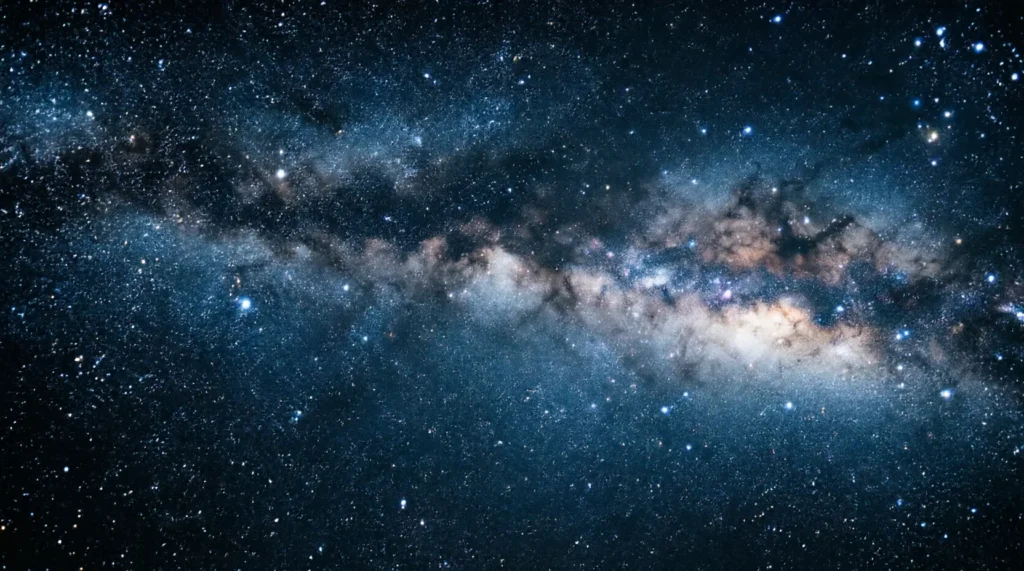
When you need to capture the magic of a starlit sky, a well-chosen simile transforms ordinary description into something that sticks with your reader. The examples below are organized by mood and intensity, each shown in context so you can see exactly how it works in real writing.
Romantic and Dreamy Star Similes
These similes work beautifully in love letters, wedding vows, or any passage where wonder and tenderness matter more than precision.
“like scattered diamonds on black velvet” — “The sky above the lake was like scattered diamonds on black velvet.” (luxurious, intimate)
“like a million tiny lanterns lit for a festival” — “Looking up, she saw the stars like a million tiny lanterns lit for a festival.” (celebratory, warm)
“like sugar spilled across midnight” — “His eyes reflected the stars, like sugar spilled across midnight.” (sweet, delicate)
“like wishes waiting to be granted” — “We lay on the roof watching stars like wishes waiting to be granted.” (hopeful, yearning)
“like silver dust shaken from a cloth” — “The Milky Way stretched overhead like silver dust shaken from a cloth.” (ethereal, gentle) — Craft note: The verb “shaken” gives this unexpected movement; most writers reach for static images, but this one breathes.
“like a lover’s promises whispered in the dark” — “Those stars burned like a lover’s promises whispered in the dark.” (intimate, slightly bittersweet)
“like confetti tossed at a cosmic celebration” — “New Year’s Eve in the mountains showed stars like confetti tossed at a cosmic celebration.” (joyful, expansive)
Bright and Brilliant Star Similes
Use these when you need to emphasize intensity, clarity, or the sheer visual impact of starlight.
“like holes punched in the sky to let heaven’s light through” — “The desert stars were like holes punched in the sky to let heaven’s light through.” (spiritual, vivid) — This is the version my students always reach for first because it’s visceral and immediate.
“like ice crystals catching moonlight” — “Morning’s last stars sparkled like ice crystals catching moonlight.” (crisp, clean)
“like a billion candles refusing to be blown out” — “Through the telescope, the cluster burned like a billion candles refusing to be blown out.” (defiant, persistent)
“like shattered glass glittering in the dark” — “The winter stars cut through the blackness like shattered glass glittering in the dark.” (sharp, dangerous beauty)
“like electric sparks frozen mid-flight” — “The meteor shower left stars like electric sparks frozen mid-flight.” (dynamic, modern)
“like salt flung across obsidian” — “From the beach, the stars looked like salt flung across obsidian.” (textural, elemental)
“like a chandelier hung too high to touch” — “The palace ceiling fresco showed stars like a chandelier hung too high to touch.” (elegant, unreachable)
Distant and Mysterious Star Similes
These work when you’re writing about longing, the unknown, or the vastness of space.
“like eyes watching from another world” — “She felt the stars like eyes watching from another world.” (unsettling, aware)
“like secrets the universe won’t tell” — “He studied the stars like secrets the universe won’t tell.” (enigmatic, intellectual)
“like memories from a life you can’t quite recall” — “The ancient starlight reached us like memories from a life you can’t quite recall.” (haunting, melancholic)
“like questions written in a language no one speaks” — “The constellation mapped the sky like questions written in a language no one speaks.” (philosophical, isolated)
“like ghosts of suns long dead” — “Through the telescope, we saw stars like ghosts of suns long dead.” (somber, awe-inspiring) — Craft note: “Ghosts of suns” creates a double haunting—the stars themselves are dead, their light just now arriving. This temporal dislocation is what makes astronomy poetry.
“like a code no one has cracked” — “The pattern repeated like a code no one has cracked.” (puzzling, systematic)
“like whispers from the edge of everything” — “In the silence, the stars felt like whispers from the edge of everything.” (existential, quiet)
Cold and Sharp Star Similes
Perfect for winter scenes, harsh realities, or when you need stars to feel unwelcoming rather than comforting.
“like ice needles piercing the dark” — “The Arctic stars hung like ice needles piercing the dark.” (painful, precise)
“like frost etched on a windowpane” — “Morning stars clung to the sky like frost etched on a windowpane.” (delicate, temporary)
“like a blade’s edge against black cloth” — “The brightest star cut the horizon like a blade’s edge against black cloth.” (threatening, clean)
“like frozen tears that never fall” — “Her grief mirrored the stars, like frozen tears that never fall.” (sorrowful, suspended)
“like metal filings scattered on slate” — “The industrial sky showed stars like metal filings scattered on slate.” (harsh, mechanical)
“like the glint of a knife in shadow” — “That single star shone like the glint of a knife in shadow.” (sinister, focused)
“like winter breath caught mid-exhale” — “The cold stars hung like winter breath caught mid-exhale.” (fragile, fleeting) For more, see Describe.
Scattered and Numerous Star Similes
Use these when emphasizing quantity, randomness, or the overwhelming nature of the night sky.
“like sand grains too many to count” — “The beach at night revealed stars like sand grains too many to count.” (infinite, humbling)
“like popcorn spilled across a black floor” — “The children laughed at stars like popcorn spilled across a black floor.” (playful, abundant)
“like a crowd at a concert seen from above” — “The galaxy cluster appeared like a crowd at a concert seen from above.” (organized chaos, vast)
“like freckles on the face of night” — “Her poem described stars like freckles on the face of night.” (intimate, endearing) — This one avoids the tired “diamonds” cliché while keeping warmth; it’s my go-to for accessible wonder.
“like seeds scattered by a careless hand” — “The random stars looked like seeds scattered by a careless hand.” (natural, uncontrolled)
“like a spilled box of matches in the dark” — “The campfire smoke cleared to show stars like a spilled box of matches in the dark.” (sudden, illuminating)
“like raindrops frozen before they fall” — “The storm passed, leaving stars like raindrops frozen before they fall.” (suspended, expectant)
Ancient and Timeless Star Similes
These work for historical fiction, philosophical writing, or any context where deep time matters.
“like witnesses to every story ever told” — “The pyramids stood beneath stars like witnesses to every story ever told.” (authoritative, eternal)
“like coins from an empire that never fell” — “Ancient astronomers mapped stars like coins from an empire that never fell.” (valuable, enduring)
“like the same light your ancestors saw” — “She felt connected to stars like the same light your ancestors saw.” (continuity, humble)
“like a library written before language” — “The constellation patterns formed like a library written before language.” (primordial, unknowable)
“like fossils of fire” — “The distant stars burned like fossils of fire.” (archaeological, paradoxical) — Craft note: “Fossils of fire” yokes together preservation and destruction. It shouldn’t work, but the cognitive friction makes it memorable.
“like a clock that measures eons, not hours” — “We waited beneath stars like a clock that measures eons, not hours.” (patient, geological)
“like the first words the universe spoke” — “In the silence, stars felt like the first words the universe spoke.” (origin, sacred)
How to write your own star simile
Creating an effective star simile requires matching the comparison to your scene’s emotional temperature. Here’s my three-step process:
Step 1: Identify what aspect of the stars matters most in this moment—is it their number, their brightness, their distance, or their permanence?
Step 2: Choose a comparison object from the same emotional family. If your character feels small and overwhelmed, reach for vast things (oceans, crowds, deserts). If they feel wonder, choose precious things (jewels, gifts, art).
Step 3: Test it aloud. If it sounds like greeting-card language, push further. “Like diamonds” is tired. “Like diamonds someone forgot to collect” has a story in it.
Worked example: Let’s say you’re writing about a character who just lost someone and looks up at the stars feeling abandoned.
Weak version: “The stars were like diamonds in the sky.” (generic, doesn’t match the emotion)
Stronger version: “The stars burned like a thousand eyes that refused to blink, watching but not helping.” (matches isolation, adds agency to the indifference)
Frequently Asked Questions
What makes a star simile effective versus clichéd?
An effective simile reveals something specific about both the stars and the character observing them. “Like diamonds” tells us nothing new. “Like diamonds my father couldn’t afford to buy my mother” connects the stars to a particular relationship and class reality. The best similes do double duty—they describe the sky while advancing character or plot.
Can I mix star similes with metaphors in the same passage?
Yes, but sparingly. If you write “the stars were diamonds scattered on velvet” (metaphor) and then two sentences later add “they twinkled like nervous children” (simile), you’re asking readers to hold two different comparison frameworks simultaneously. Pick one dominant image and let it breathe, or space your comparisons further apart.
How do I avoid making star descriptions sound purple or overwrought?
Ground your similes in concrete, physical details rather than abstract emotions. Instead of “stars like hope in a hopeless heart,” try “stars like streetlamps in a city that never sleeps.” The second gives readers something they can actually see and verify. Also, follow a flowery simile with plain, direct prose to let it land without drowning the reader.
Should I use scientific accuracy or poetic license with star similes?
It depends on your genre and audience. Literary fiction can get away with “stars like ancient candles” even though stars aren’t candles and aren’t necessarily ancient from our perspective. Hard science fiction demands precision. Most readers won’t fact-check your similes, but they will feel it when a comparison breaks the internal logic of your world. Choose images that serve the story first, accuracy second—unless accuracy is the story. For more on this figure of speech, see Wikipedia’s overview of similes.

Brandon Robinson is a literary enthusiast and seasoned editor with a deep-rooted passion for figurative language and its transformative power in storytelling. He completed his Ph.D. in Linguistics from the University of Chicago, specializing in the cognitive impact of metaphors and similes in narrative construction. With over 18 years in the publishing industry, Brandon has helped shape numerous literary works by providing his expertise in metaphorical nuance and creative expression. His journey into the world of similes began when a high school poetry class opened his eyes to the elegance of figurative comparisons. At SimileCraft, Brandon writes thought-provoking essays that explore the cognitive science behind similes, while also curating content that inspires writers to use these tools more effectively. His pieces are a blend of scholarly insight and practical advice, tailored for an audience eager to deepen their literary skills.